Web design
Design that starts with who reads the site and ends as a system your own engineers and translators can use.
Most organisations we work with publish in several languages to readers who have nothing in common except the site: a coordinator on a phone in the field, a donor’s adviser in Geneva, a journalist, a ministry. Design that serves all of them cannot start from a look. It starts from a map of who the site is for and what each of them needs to do.
So we research first: stakeholder and audience questionnaires, and a reading of the current site’s own database rather than a crawl. On The Collective Service that count showed most of the library belonged to 2020 to 2022, and it changed the plan before a page was drawn.
Then we prototype the real thing early. You review working pages on real screens, pin comments to them, and approve a prototype you have clicked through before anything is built. Decisions are made on an interface, not on pictures of one.
What you receive is a design system: colour tokens, type, components and their states, documented so that engineering implements it without interpretation and so that it holds across six scripts, including right-to-left. The Collective Service runs 30 page templates from one such system.
What you get
Audience map
Who the site serves, what each group needs to do and which pages carry that, agreed before design starts.
Prototype
A clickable prototype of the real pages, reviewed on real screens with comments pinned to the page. You approve it before build.
Design system
Tokens, components and states, documented for engineering and set in six scripts, including Arabic.
Every width
Each template checked from 320 to 1,920 pixels, so nothing scrolls sideways on a phone.
Content in place
Real content from the first prototype, with page weight and reading order decided as part of the design.
Fees
Design is priced with the build: a website from CHF 35,000, a website and brand from CHF 60,000. Fixed to scope, agreed before work starts and invoiced in Swiss francs. All fees →
On the record
- 30 page templates from one design system (The Collective Service)
- Every template checked from 320 to 1,920 pixels
- Reviewed on real pages, not pictures, with only approved pages moved to WordPress (Global Girls Foundation)
From the work
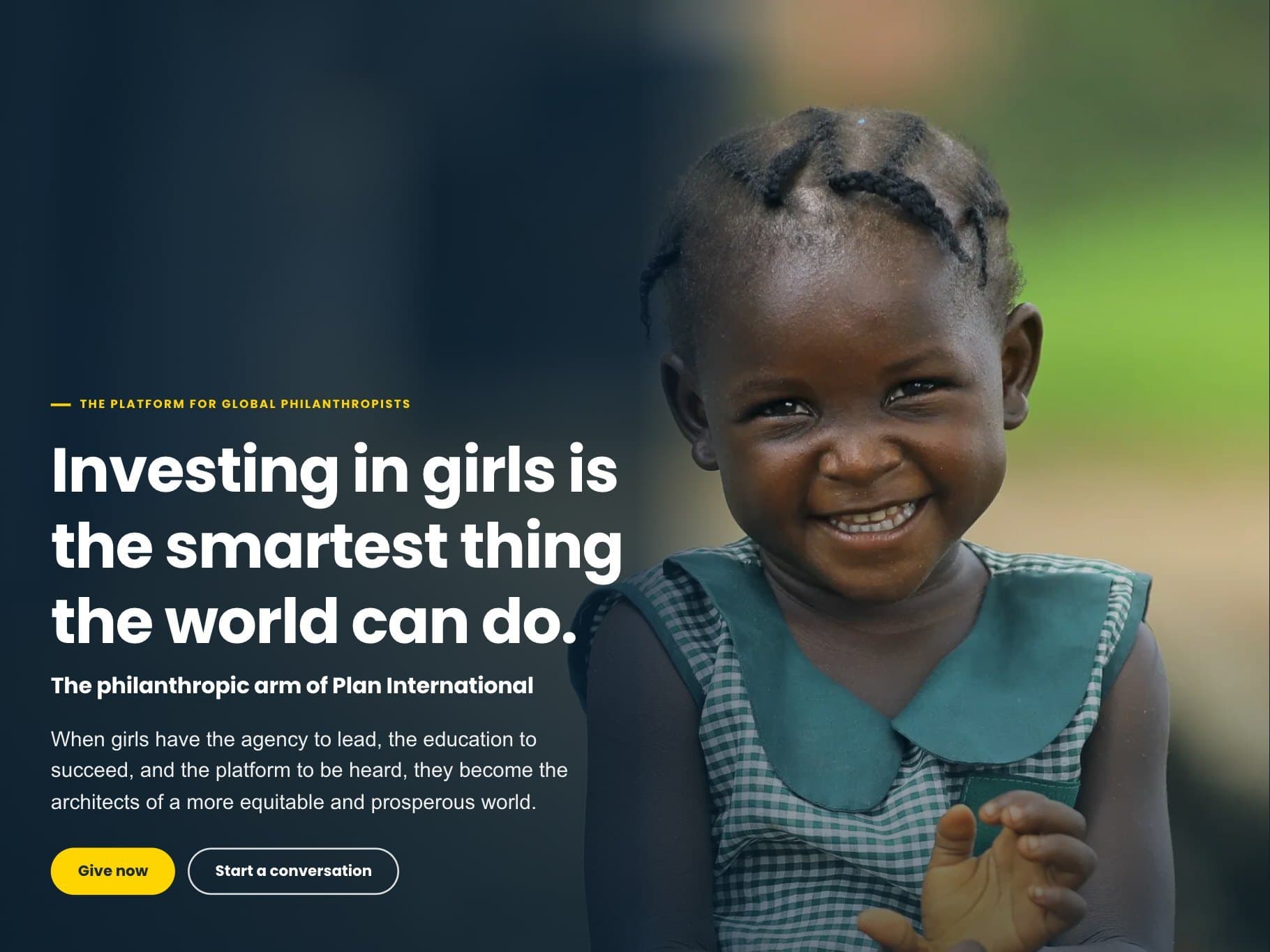
Global Girls Foundation
Foundation · 2026 · Two routes on the first screen: give now, or start a conversation.
Read the case study →Questions we are asked
Can we see the design before we commit to the build?
Yes. Design sign-off is the second of the four approval points, and the second invoice falls there. Nothing is built before it.
We already have brand guidelines. Do you work within them?
Yes. We design within them and tell you in the proposal where they will not meet contrast requirements or hold in another script. See Branding →
Who does the translation?
Your translators, or ones you name. The design system gives them room: every label is built for text a third longer than the English, and right-to-left is tested, not assumed.
Contact
Send us the brief.
A rough brief or a terms of reference is enough. Matthew Bowman replies the same business day, and you have a fixed-fee proposal within five working days.